Tonehus™ QuickEQ · … · 30-day free trialTry it free
TONEHUS QUICKEQ

Accurate curves.
Honest color.

A precise EQ with tube and transformer character, and fewer digital artifacts than heavy oversampling.

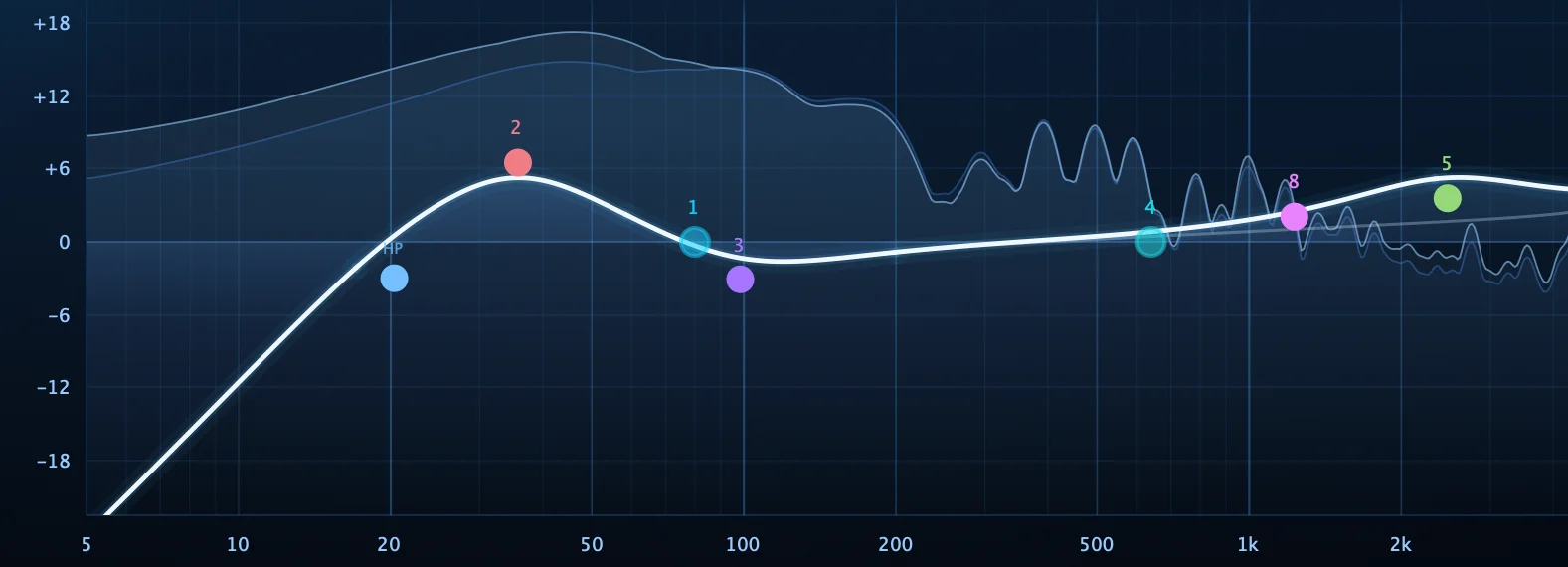
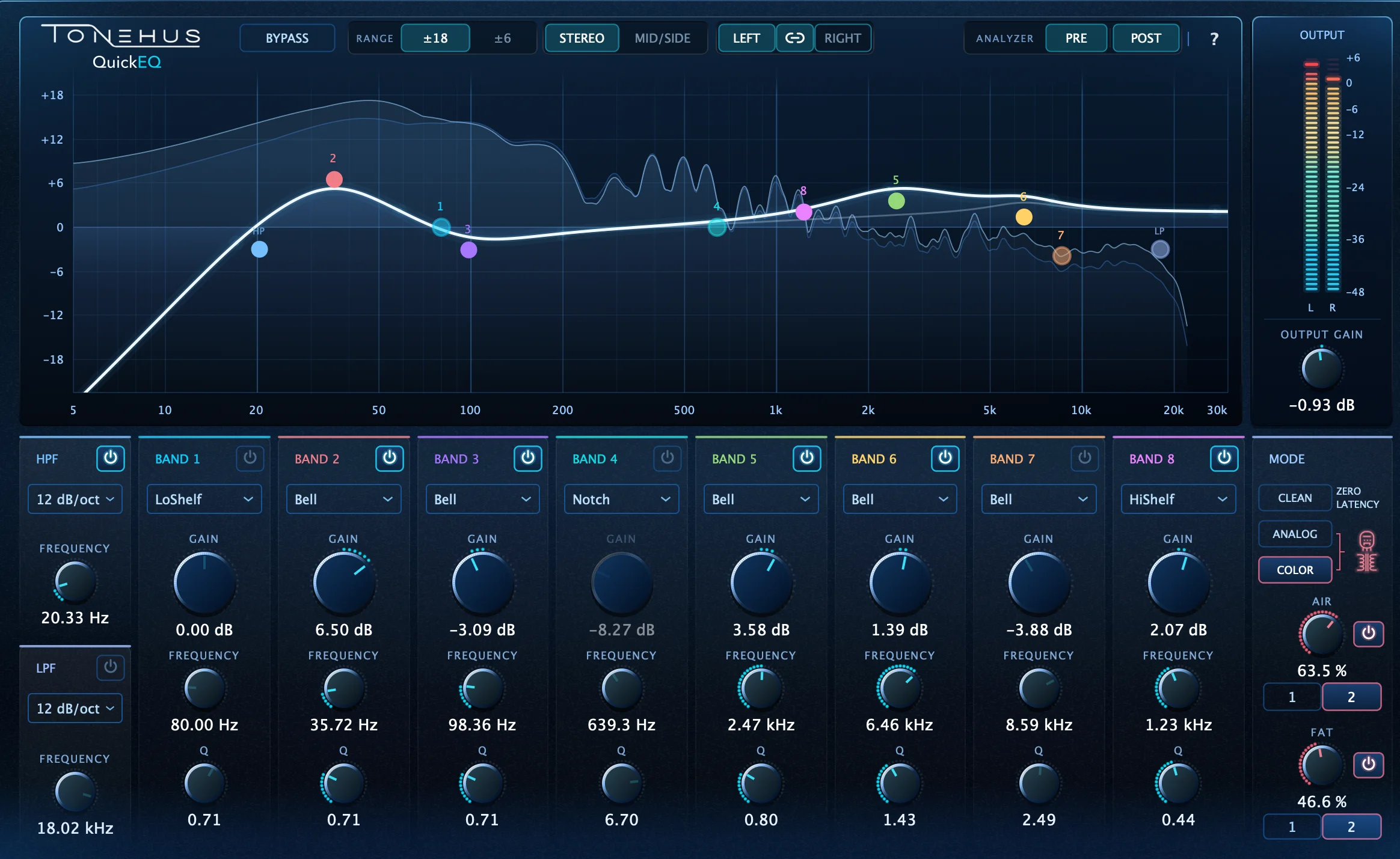
Tonehus QuickEQ interface: live spectrum analyzer, eight colored EQ bands, high- and low-pass filters, and Clean, Analog and Color modes with Air and Fat controls

…

Full version. No payment needed.

Zero latency and no added distortion. Precision you can measure.

  • 0 mslatency in Clean mode
  • Analogaccurate curves up to Nyquist
  • Air & Fatcolor built in
  • Zero latency in Clean mode
  • VST3
  • AU
  • AAX
  • macOS & Windows
WHY QUICKEQ
  • 01Precision curves
  • 02Clean or analog flavor
  • 03Air & Fat strokes

Fewer features.
Faster decisions.

QuickEQ has no dynamic bands and no spectral modes, on purpose. It is built for the moment you already hear what the sound needs and want it done in a few moves. Every control is where your hand expects it, and every curve does exactly what it shows. When the tone is right, add color without opening another plugin.

FROM THE FOUNDER

“The equalizer is the tool we reach for most in mixing and mastering. I wanted to make that process as fast and precise as possible, with the option to add color when you want it. QuickEQ can be surgically clean, or add color like a high-end mastering EQ, or even a color box.”

Mykola Basyuk, founder of Tonehus
01 / ACCURACY

Curves that behave like analog.

Most digital EQs bend their curves near the top of the spectrum. QuickEQ follows the ideal analog response up to Nyquist in every mode, even at lower sample rates, with analog-like phase and no FIR filters. Zero latency and no pre-ringing in Clean mode, almost none when color is added.
02 / COLOR

Air and Fat, built in.

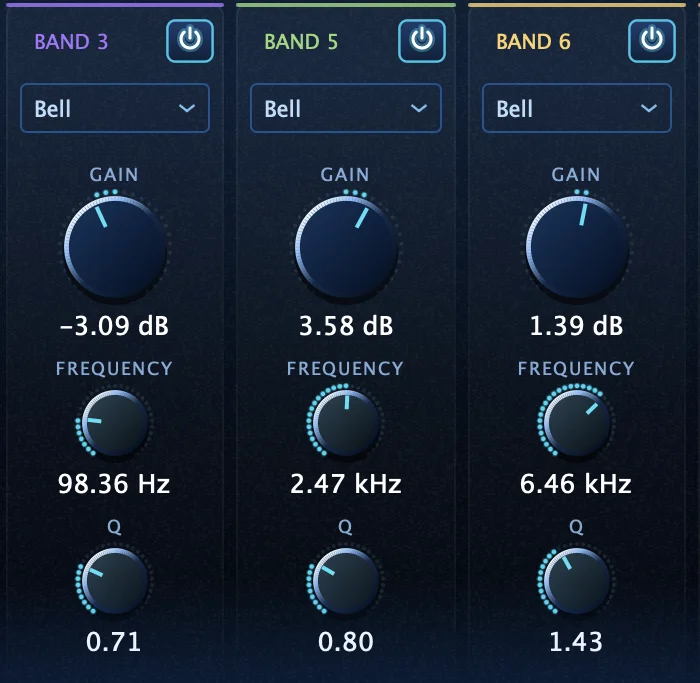
Add high-end openness or low-end weight right inside the EQ. One plugin instead of a chain.

03 / CLEAN COLOR

Only the harmonics are oversampled.

Your clean signal never goes through oversampling filters. You get color with very low aliasing and low CPU.

FROM OUR USERS

“Tonehus QuickEQ is my go-to tool, with accurate and responsive reaction on my multitracks and master tracks. The output stage is definitely a smart start to polish the result.”

Pierre Attyasse, Pixel Room Studio
ONE EQ. THREE CHARACTERS.

Surgical when you need it.
Colorful when you want it.

Every mode shares the same analog-accurate curves. Clean mode adds nothing to them, with zero latency. Analog and Color add the kind of character usually reserved for high-end mastering equalizers and dedicated color boxes. Same curves, same workflow. You decide how much the EQ speaks.

01 / CLEAN MODE

Precision,
measured.

The curve you draw is the curve you hear, and nothing else. Clean mode adds no latency and no distortion to QuickEQ’s analog-accurate curves.

  • Zero latency
  • No added distortion
  • Nothing but the curve you draw
02 / ANALOG MODE

The polish of
a mastering EQ.

Some equalizers are prized as much for their sound as for their curves. Analog mode brings that refined, expensive-sounding color to every move you make, adding weight, depth and a sense of finish without getting in the way.

  • Subtle, musical coloration
  • Refined, mastering-grade polish
  • At home on the mix bus and in mastering
03 / COLOR MODE

Character with
attitude.

When subtle isn’t enough. Color mode brings the bold character engineers usually reach for a dedicated color box to get, right inside your EQ. Add warmth and presence, or give a sound a personality of its own.

  • Bold, harmonic character
  • Bold color without a separate plugin
  • Precision EQ and character in one plugin
ACCURACY

The curve you draw
is the curve you get.

A standard digital EQ (bilinear transform) squeezes its curves as they approach half the sample rate. Bells get narrower, shelves shift, and high boosts lose their shape. At 44.1 kHz this starts well inside the audible range.

Every QuickEQ band is matched to the ideal analog filter it represents. Bells, shelves and notches keep their analog shape up to the top of the spectrum, without oversampling, and with zero latency in Clean mode.

Boost the lows, and the highs stay where you left them.

A 20 kHz high shelf: QuickEQ and a standard digital EQ against the ideal analog response, and the worst error of each, including standard EQs with 2× to 16× oversampling
A 20 kHz high shelf (+12 dB, Q 0.707). QuickEQ (dashed) sits on the ideal analog response (wide amber line). A standard digital EQ (rose) bends away well before Nyquist.

Worst deviation from the analog reference, 20 Hz–20 kHz, 44.1 kHz: QuickEQ 0.014 dB, standard digital EQ 4.1 dB. That is the accuracy of a standard EQ run at 16× oversampling (0.010 dB), without oversampling.

How we measure and more graphs →
PHASE, ALL THE WAY UP

Smooth phase,
right up to Nyquist.

Near Nyquist, half the sample rate, every digital EQ runs into limits that force compromises. QuickEQ’s filters are designed to keep their phase behavior as close to analog filters as possible, with those compromises made so the phase response stays smooth, and with careful attention to the accuracy of every parameter, even at lower sample rates.

AIR & FAT

Color without
another plugin.

Air
A smooth high-frequency lift with a gentle harmonic glow. Opens up vocals, overheads and full mixes without harshness.
Fat
Low-end weight and density with warm harmonics that stay under control.
VocalPress play, then switch versions
DrumsPress play, then switch versions
Full mixPress play, then switch versions

Vocal and drums: no other processing.

CLEAN COLOR

Oversampling only
where the harmonics are.

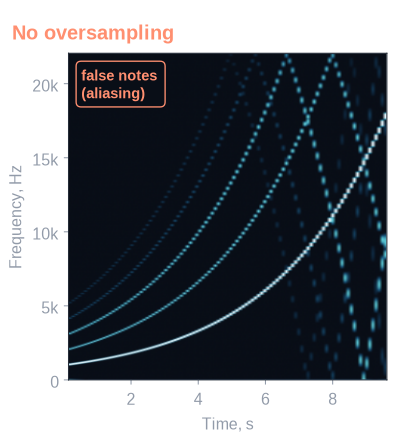
Saturation creates new harmonics, and some of them fold back as aliasing. The usual fix is to oversample the processed signal. That sends your clean audio through extra filters just to add a little color.

QuickEQ oversamples only the harmonics it generates. Your dry signal is only delayed by a fixed 12 samples, not run through oversampling filters. Aliasing stays very low, and very little energy lands ahead of the attack, so the color blends in without smearing transients.

Input
Clean EQ pathOversampled harmonics only
Output

Simplified processing overview.

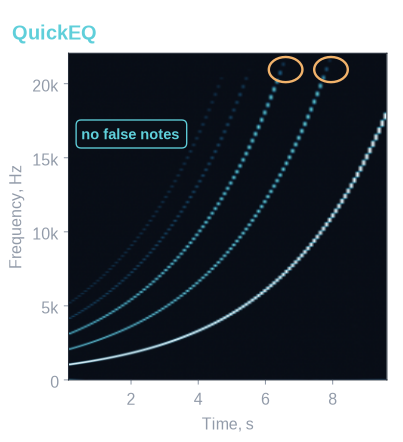
Sweep through Fat without oversampling: harmonics fold back as false notes
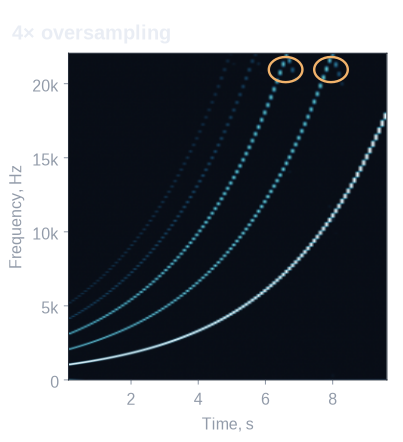
Sweep through Fat with 4× oversampling: no false notes
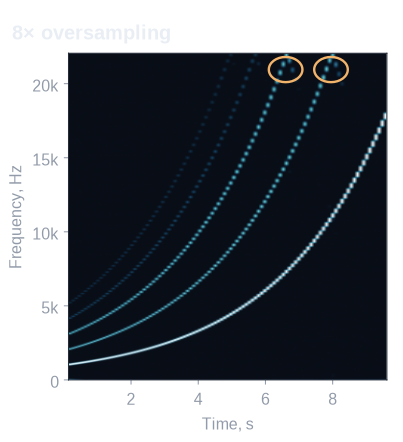
Sweep through Fat with 8× oversampling: no false notes
Sweep through Fat with QuickEQ: no false notes
Color scale from −140 to −35 dBFS

A 1–20 kHz sweep through Fat at 44.1 kHz, the same color scale on every panel. Without oversampling, harmonics fold back as false notes. 4×, 8× and QuickEQ show none of them.

The trade-off: QuickEQ also filters out the few harmonics that reach just under Nyquist (circled), which oversampling keeps. See all measurements →

WORKFLOW

Video is coming soon.

At a glance.

Product
Tonehus QuickEQ
Price
…
Free trial
30 days, full version. Then Clean with 6 bands
EQ modes
Clean / Analog / Color
Built-in color
Air / Fat
Formats
VST3, AU, AAX
Systems
macOS 13+ (Universal: Apple Silicon & Intel), Windows 10 and 11 (64-bit)
Latency (Clean mode)
Zero
Bands
8 bands (bell, low/high shelf, notch) + high- and low-pass 6–48 dB/oct. Air and Fat in Analog and Color modes
Sample rates
44.1 kHz and up
Licensing
3 activations per license, managed in your Tonehus account
Developer
Kongsen Media AS

Questions.

Why no dynamic EQ or spectral modes?

QuickEQ is built for speed and clarity. We left out what slows decisions down and put the work into how the curves sound and behave.

Does QuickEQ add latency?

Not in Clean mode: it is zero-latency. Analog and Color modes add a small fixed latency of 12 samples (0.27 ms at 44.1 kHz), which your DAW compensates automatically.

What does “analog-accurate” mean?

Each band is matched to the ideal analog filter with the same frequency, gain and Q. We publish how we measure it.

Is it heavy on CPU?

No. Oversampling runs only on the generated harmonics, so you can use QuickEQ on every track.

Can I try the full version first?

Yes. The trial is the full plugin for 30 days. After that it keeps working in Clean with 6 bands, and sessions you saved during the trial play exactly as before.

How many computers can I use?

Three at the same time. You can move activations in your account.

Is AAX supported?

Yes. QuickEQ comes as AAX for Pro Tools, alongside VST3 and AU.

Where do I get help?

support@tonehus.com. We usually answer within 2 business days.

TRY BEFORE YOU BUY

Hear it.
Make it yours.

Start the 30-day trial, or buy it for ….

Product questions ↗